Go back
Go back

Sebati / Product Development

Building Early-Stage Product to Acquisition
Role
Head of Design
Company
Sebati
Type
Software Development
Sebati started as an early-stage concept in a space where business and data teams relied on fragmented BI tools, disconnected workflows, and scattered institutional knowledge. Generating insights was slow, manual, and heavily dependent on technical teams.
As part of Sebati’s founding team, I helped shape a unified product direction—bringing data and context into one place so teams could move from questions to insights with far less friction.

Discovery
The core issue wasn’t a lack of tools, but a lack of cohesion.
Data lived across multiple systems, reporting workflows were inconsistent, and non-technical teams struggled to move from questions to answers without friction.
This created:
Slow decision-making
High dependency on data teams
Limited accessibility to insights across the organization
Through discovery and workflow analysis, I helped reframe the challenge, then led the design process to structure it into one cohesive experience, prototyping and systemizing the product into a unified platform.

Execution
After gathering all requirement details and ideas, it became clear that fragmentation was not just a tooling issue, but a structural one. Data felt scattered because the organization itself operates in divisions with different responsibilities. Instead of forcing everything into a single flat reporting layer, we designed the platform around workspaces.
Each workspace reflects how a business actually runs, whether it is marketing, finance, operations, or product. Teams manage their own operational data within a defined context, aligned with their goals and ownership.

With this structure in place, top level management can monitor performance across divisions without navigating multiple systems, while teams retain autonomy within their own domain. Insights are no longer buried across tools. They exist within a system that mirrors how the organization truly operates.

Letting Users Define What Matters
At the early stage, our vision was to make reporting as seamless as possible. Financial reports, operational summaries, and business performance reviews were designed to be predefined and template-based. The goal was to reduce friction, standardize structure, and eliminate repetitive work.
However, we learned that efficiency alone was not enough. Teams wanted flexibility. They needed to shape the narrative around the same data.
This led to Smart Custom Dashboards, a presentation layer that balances structure and freedom. While the underlying data model remains governed and intelligent, users can combine charts, metrics, and contextual insights based on their goals.
The result is reporting that is both structured and adaptable, guided yet customizable.
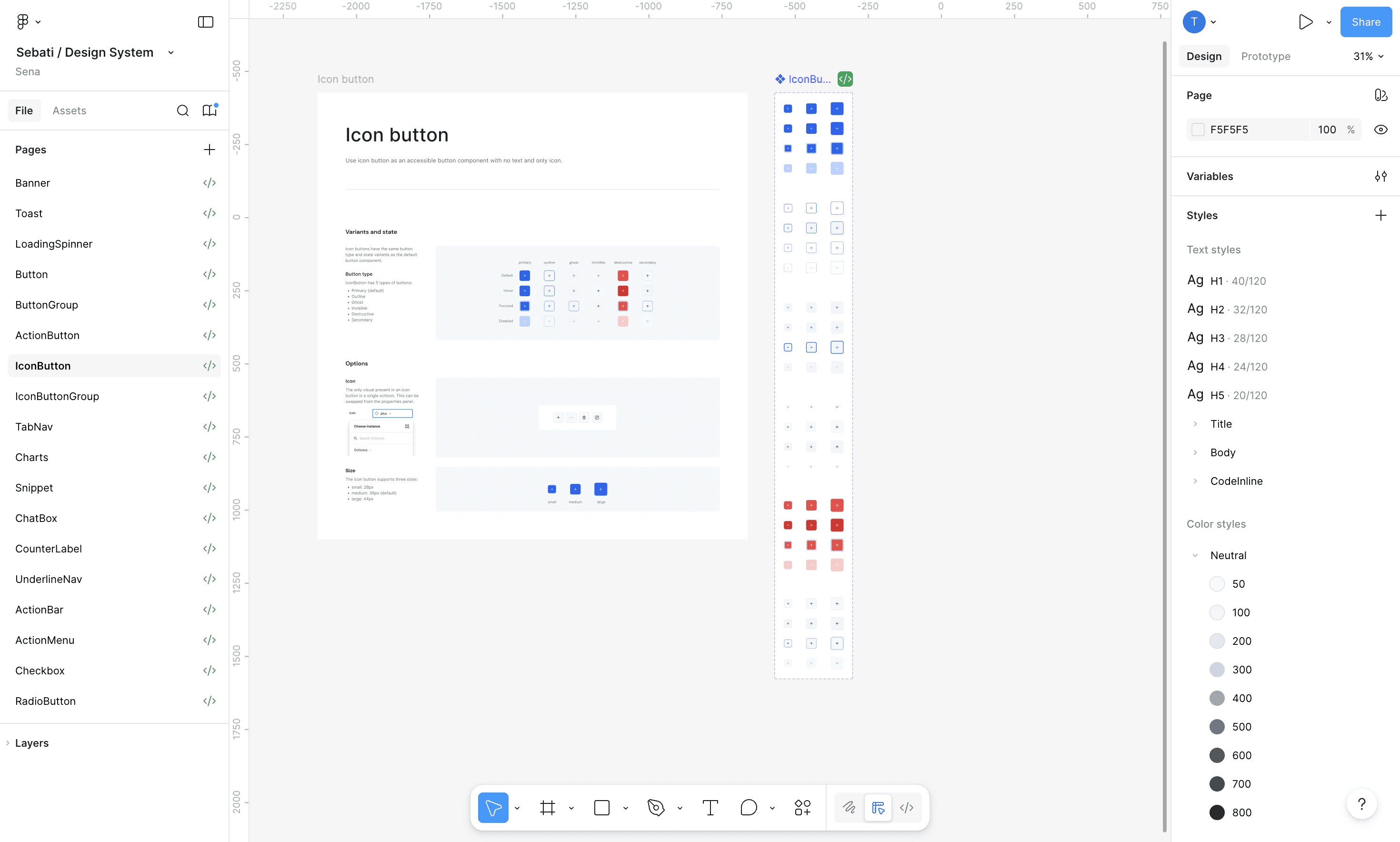
Design System
Alongside the Track and Trace MVP, I established a white labeled design system and scalable component library based on Material principles. This ensured consistency and enabled future development, while significantly accelerating rapid prototyping and new concept exploration.
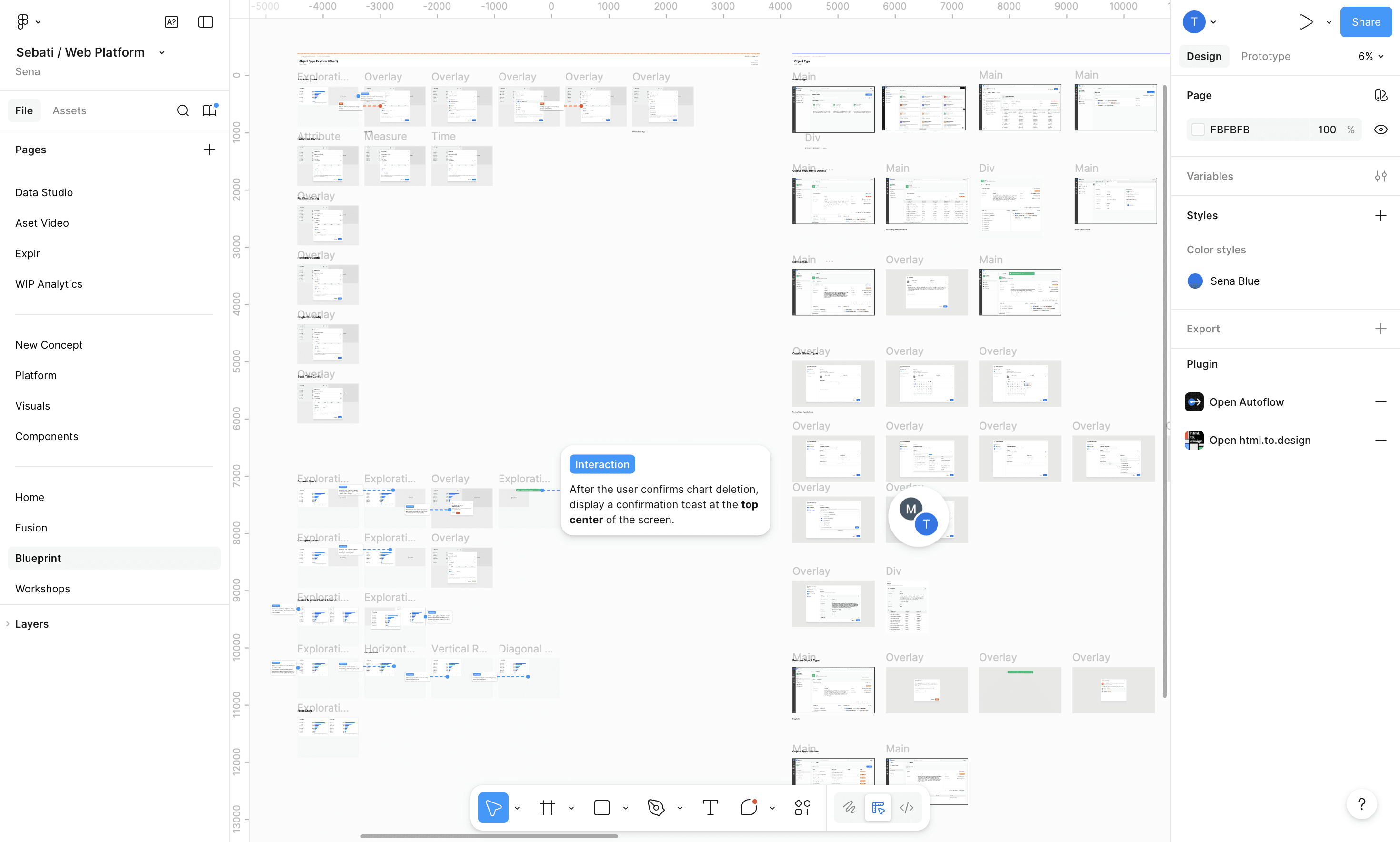
Leadership
When I stepped into the Head of Design role, my focus shifted from screens to systems. I defined the platform’s visual direction from the ground up, setting clear standards for hierarchy, layout, and component behavior to ensure long-term consistency.
As the product evolved, I introduced a structured design log to document decisions and refinements, keeping cross-functional teams aligned. I also made interaction annotations mandatory to remove ambiguity during handoff and reduce implementation gaps.
Over time, design became not just execution, but a scalable system that brought clarity to the entire product.
Impact
The platform was projected to reduce reporting turnaround time by 40 to 60 percent by eliminating fragmented workflows and consolidating structured and unstructured data into a unified layer.
Beyond operational gains, the work established a scalable intelligence framework: structured data combined with contextual knowledge and AI interpretation leading to faster insights and stronger strategic execution.
This validated not just product usability, but market potential and long-term enterprise value.
Proof of Value
The MVP did more than demonstrate usability. It validated market demand.
The product secured pre-seed investment shortly after its initial presentation, supported by strong early validation and near-unanimous positive feedback from prospective clients. Rejection rates were minimal, and multiple potential enterprise clients expressed strong interest following the product demonstrations.
This early traction reinforced the product’s strategic positioning and strengthened investor confidence.
Ultimately, the clarity of the vision, the structured intelligence framework, and the validated market response contributed to the company’s acquisition by Feedloop AI, marking a successful transition from early-stage innovation to strategic scale.

